
Hearing scratching, squeaking, or running sounds above your ceiling can be frustrating, especially when the noise starts at night.
Rats often use ceiling spaces and roof voids as hiding places because they offer warmth, shelter, and protection from people and predators.
The good news is that you don’t always need to trap rats to get them out of your ceiling. You can use a combination of natural deterrents, proper sanitation, entry-point sealing, and exclusion methods to encourage them to leave and prevent them from returning.
However, getting rid of rats permanently requires more than making your ceiling uncomfortable. You also need to identify how they are getting inside and remove whatever is attracting them.
In this guide, you’ll learn how to get rid of rats in the ceiling without trapping them, which methods are worth trying, what to avoid, and how to keep them from coming back.
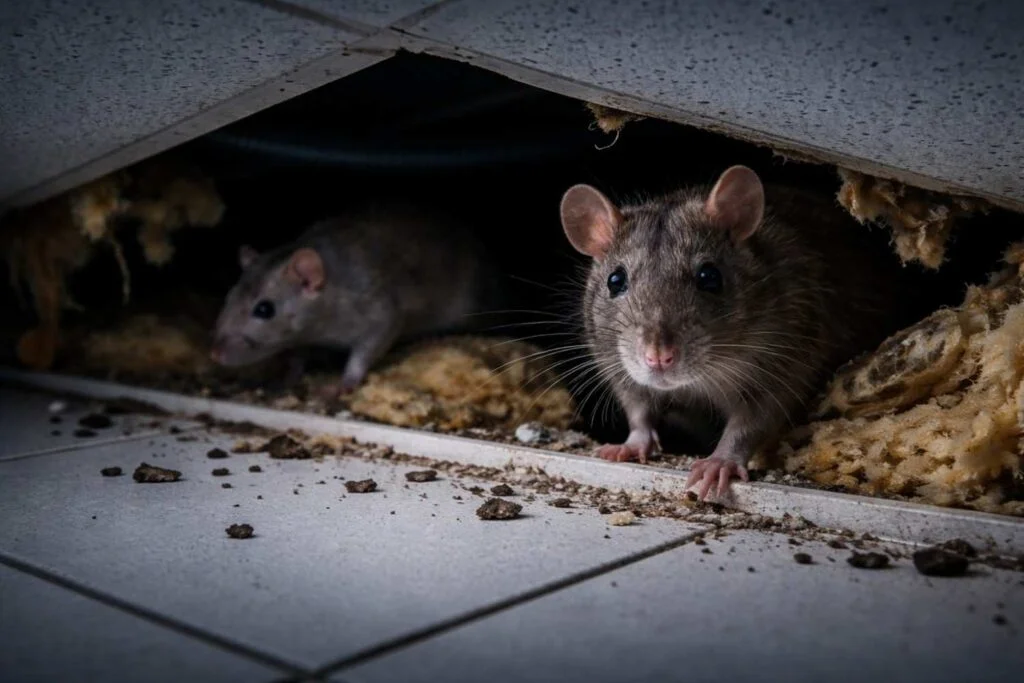
1. Identify Where the Rats Are Hiding
Before using any rat deterrents, try to determine where the rats are moving and where they might be entering your ceiling.
Rats are mostly active at night, so listen for movement after dark. You may hear:
- Scratching or gnawing sounds above the ceiling.
- Running or scurrying noises across the roof.
- Squeaking or occasional chattering.
- Sounds of objects being moved or insulation being disturbed.
- Strong unpleasant smells coming from the ceiling.
You can also inspect accessible roof spaces during daylight hours, provided it is safe to do so.
Look for rat droppings, gnaw marks, nesting materials, greasy rub marks along beams, and damaged insulation.
Important: Avoid disturbing droppings or nesting materials. Rodent waste can carry harmful pathogens. Do not sweep or vacuum dry droppings. Use appropriate protective equipment and follow public health guidance for safe cleanup.
Knowing where the rats are hiding helps you choose the right removal method instead of wasting time applying deterrents throughout the house.
2. Seal the Holes Rats Use to Enter the Ceiling
One of the most effective ways to get rid of rats in your ceiling without trapping them is to stop them from entering your home.
Rats can squeeze through surprisingly small openings. Roof gaps, damaged soffits, loose vents, and spaces around pipes can all provide access to ceiling spaces.
Inspect these areas carefully:
- Roof edges and eaves.
- Gaps between roofing materials.
- Spaces around plumbing and electrical pipes.
- Damaged soffits and fascia boards.
- Roof vents and ventilation openings.
- Openings around air-conditioning installations.
Seal small gaps with rodent-resistant materials such as metal mesh, hardware cloth, or suitable metal flashing. Larger openings may require repairs to the roof or soffit.
Do not seal every opening immediately if you suspect rats are still inside. You could trap them in the ceiling, causing them to die there or damage other parts of the house trying to escape.
First establish the rats’ exit routes and use a properly designed one-way exclusion device where appropriate. Once you are confident all animals have left, permanently seal the openings.
3. Use Peppermint Oil as a Rat Deterrent
Peppermint oil is a popular natural remedy for discouraging rats from certain areas of the home.
Its strong smell may make some spaces less attractive to rodents. However, peppermint oil is not a proven way to eliminate an established rat infestation, especially when rats are nesting inside a ceiling.
If you want to try it, use the following approach:
- Purchase peppermint essential oil.
- Put a few drops on cotton balls.
- Place them in accessible areas near suspected entry points.
- Replace them when the scent fades.
- Keep the cotton balls away from children and pets.
Avoid placing cotton balls near hot electrical equipment, exposed wiring, or other potential fire hazards.
For ceiling infestations, peppermint oil is best considered a supplementary deterrent rather than a complete solution.
4. Remove Food Sources That Attract Rats
Even if rats are nesting above your ceiling, they may be entering your home because they can easily find food.
Rats are opportunistic feeders. They will eat grains, cereals, fruits, pet food, leftovers, and food waste.
Making food harder to access can encourage them to move elsewhere.
Here are some practical steps:
- Store rice, flour, cereals, and other dry foods in tightly sealed containers.
- Avoid leaving food uncovered overnight.
- Clean crumbs and food spills immediately.
- Keep pet food in sealed containers.
- Empty rubbish bins regularly.
- Use bins with tightly fitting lids.
- Avoid leaving fallen fruits around your property.
Pay attention to outdoor food sources too. Chicken feed, animal feed, compost, and poorly managed rubbish can attract rats close to your roof.
Removing food sources will not automatically force rats out of the ceiling, but it reduces the resources that make your property attractive to them.
5. Trim Tree Branches Near Your Roof
If you have trees growing close to your house, they may provide rats with an easy route onto your roof.
Some rats are excellent climbers and can use tree branches, vines, fences, and nearby structures to reach roof spaces.
Inspect the trees around your home, especially branches that touch or hang directly over the roof.
To reduce access:
- Trim branches that touch the roof.
- Remove vines growing against exterior walls.
- Clear dense vegetation around the house.
- Keep climbing plants away from roof edges.
- Remove debris and stored materials that provide hiding places.
Whenever possible, maintain a clear gap between trees and your roof.
Be careful when trimming large branches or working near electrical lines. Hire a professional for dangerous or high branches.
6. Install a One-Way Rat Exclusion Device
If rats are already living in your ceiling, a one-way exclusion device can be one of the most useful alternatives to trapping.
Unlike traditional traps, one-way exclusion devices allow rats to leave an enclosed space but prevent them from returning through the same opening.
A typical exclusion process involves:
- Identifying the main entry and exit opening.
- Confirming that the opening is suitable for an exclusion device.
- Installing a properly designed one-way exit.
- Monitoring the area for continued rodent activity.
- Removing the device once the infestation has cleared.
- Permanently sealing the opening with rodent-resistant materials.
This method is particularly useful when rats are entering through roof gaps or other identifiable openings.
However, it must be done correctly. If there are multiple entry points, dependent young, or more than one nesting area, some rats may remain inside.
A pest-control professional can help determine whether one-way exclusion is appropriate.
7. Remove Things That Provide Nesting Materials
Rats look for soft, dry materials that they can use to build nests.
Your ceiling may provide an ideal nesting environment if it contains cardboard, old fabric, paper, insulation, or stored household items.
If you have access to your roof space, inspect it for unnecessary clutter.
Remove or properly store:
- Old cardboard boxes.
- Torn fabrics and clothing.
- Paper and newspapers.
- Unused packaging materials.
- Other loose materials that rodents can shred.
Use sealed, rodent-resistant storage containers where possible.
If you find an active nest, avoid handling it directly. Rat nests may contain urine, droppings, parasites, and young animals. Arrange safe removal and cleanup.
8. Use Ultrasonic Rat Repellents With Realistic Expectations
Ultrasonic pest repellents are electronic devices designed to produce high-frequency sounds that humans generally cannot hear.
Some products are marketed as effective ways to drive rats and mice away without using poison or traps.
However, there is limited reliable evidence that these devices can eliminate an established rat infestation.
Rats may become accustomed to repeated sounds, and ultrasonic waves do not reliably pass through walls, ceilings, furniture, or insulation.
If you decide to try an ultrasonic repellent:
- Choose a reputable product with clear specifications.
- Follow the manufacturer’s placement instructions.
- Do not expect one device to cover an entire house.
- Use it alongside entry-point exclusion and sanitation.
- Monitor whether rodent activity actually decreases.
Think of ultrasonic repellents as an optional supplementary measure, not your main rat-control strategy.
9. Make Your Roof and Surroundings Less Attractive to Rats
Rats are more likely to settle in places where they can find shelter, food, water, and easy access.
Maintaining the exterior of your home can help discourage them from returning.
Focus on these areas:
Clean your gutters: Remove leaves, branches, and debris that may provide shelter or help rodents move around the roof.
Clear rubbish: Avoid leaving rubbish bags, old furniture, and unwanted materials around your home.
Manage vegetation: Cut back dense bushes and climbing plants near walls and roof edges.
Remove standing water: Fix leaking outdoor taps and eliminate unnecessary sources of water.
Inspect your roof regularly: Repair damaged roofing materials, loose vents, and broken soffits before they become entry points.
These changes make your property less appealing to rats and help prevent future infestations.
10. Consider Professional Rat Removal Without Poison or Traps
Sometimes, rats have been living in a ceiling for weeks or months. In such situations, home remedies may not be enough.
A professional pest-control service can inspect your roof, locate nesting areas, identify entry points, and develop an exclusion plan.
If you do not want to use traps, explain this before the treatment begins.
Ask about:
- One-way exclusion systems.
- Rodent-proofing and structural repairs.
- Non-lethal removal options where practical.
- Safe removal of nesting materials.
- Inspection for hidden entry points.
- Follow-up visits to confirm that the rats are gone.
Professional exclusion is especially important when rats are inside inaccessible ceiling cavities or when there may be multiple animals.
Avoid using poison as an easy alternative. Rats can die in inaccessible ceiling spaces, creating unpleasant odors and potential fly or insect problems. Rodenticides can also poison pets and wildlife, including predators that eat poisoned rodents.
What NOT to Do When Trying to Get Rats Out of Your Ceiling
Some popular rat-removal methods can make the situation worse.
Here are a few things to avoid:
| Method | Why to avoid it |
|---|---|
| Sealing every hole immediately | May trap rats inside the ceiling. |
| Pouring chemicals into ceiling spaces | Can create toxic fumes and damage materials. |
| Using fire or smoke | Creates a serious fire and inhalation hazard. |
| Relying entirely on peppermint oil | It may not drive established rats away. |
| Using poison without a plan | Rats may die in inaccessible spaces. |
| Making loud noises repeatedly | Usually does not provide reliable long-term removal. |
| Blocking ventilation openings | Can create moisture and ventilation problems. |
The goal is to encourage rats to leave safely, prevent them from returning, and remove the conditions that attracted them.
How Long Does It Take to Get Rid of Rats in the Ceiling?
The time required depends on the size of the infestation, the number of entry points, and whether rats have established nests inside the roof.
Here is a general guide:
| Method | Expected timeframe |
|---|---|
| Removing accessible food sources | Ongoing prevention |
| Trimming nearby tree branches | Immediate access reduction |
| Installing one-way exclusion | Several days or longer, depending on activity |
| Sealing entry points | After confirming the space is clear |
| Professional inspection | Depends on the infestation |
| Cleaning and roof maintenance | Ongoing prevention |
There is no guaranteed timeline. Avoid sealing openings simply because you have not heard scratching for one night. Confirm that the animals have actually left before completing the repairs.
How to Prevent Rats From Returning to Your Ceiling
Once the rats are gone, prevention is the most important step.
Use this simple maintenance checklist:
- Inspect roof edges and eaves regularly.
- Seal gaps around pipes and vents with rodent-resistant materials.
- Trim branches touching or overhanging your roof.
- Store food in airtight containers.
- Keep rubbish bins covered.
- Remove outdoor food sources.
- Keep gutters clean.
- Repair damaged roof materials.
- Check for new droppings or gnaw marks.
- Arrange professional inspections if scratching sounds return.
Consistency matters. A clean home with properly sealed entry points is much less attractive to rats than one with easy access to food and shelter.
Frequently Asked Questions
1. What is the fastest way to get rats out of a ceiling without trapping them?
The most reliable approach is to identify their entry points and use a properly installed one-way exclusion device. This allows rats to leave while preventing them from returning. Once the space is confirmed clear, permanently seal the openings.
2. Will rats leave the ceiling if there is no food?
They may eventually move elsewhere if food becomes difficult to access, but removing food alone does not guarantee that rats will leave.
Rats can travel outside their nesting areas to find food and may continue using your ceiling as shelter.
3. Does peppermint oil keep rats out of ceilings?
Peppermint oil has a strong smell that may temporarily discourage some rodents. However, there is insufficient evidence that it reliably removes rats from ceiling spaces or prevents established infestations.
4. Can rats leave the ceiling on their own?
Yes. Rats can leave ceiling spaces to search for food and water, particularly at night. However, they may continue returning if the ceiling provides a safe nesting location and easy access.
5. Will ultrasonic repellents drive rats out of my ceiling?
Ultrasonic devices are marketed as rodent deterrents, but their effectiveness against established infestations is not well established. They should not replace exclusion, sanitation, and structural repairs.
6. How do I know if the rats are gone?
Look for a sustained absence of scratching and running sounds, fresh droppings, gnaw marks, and other signs of activity. Continue monitoring the area rather than relying on one quiet night.
A professional can also use monitoring methods to confirm that rodent activity has stopped.
7. Can rats chew through a ceiling?
Yes. Rats have strong teeth and can gnaw through certain materials, including wood, plastic, and some softer building materials. They may damage ceiling boards, insulation, wiring, and other structures.
If you notice damaged electrical wiring, arrange an inspection by a qualified electrician.
8. Is it safe to sleep in a house with rats in the ceiling?
Rats in the ceiling do not necessarily mean you must leave your home, but an infestation should be addressed promptly. Rats can contaminate surfaces with urine and droppings, damage electrical wiring, and carry disease-causing organisms.
Avoid disturbing contaminated materials and arrange proper removal and cleanup.
Final Thoughts
Getting rid of rats in your ceiling without trapping them is possible, but the most effective solution is to focus on exclusion rather than relying on strong smells or electronic repellents alone.
Start by identifying where the rats are hiding and how they enter your roof. Remove accessible food sources, reduce outdoor shelter, and use a properly installed one-way exclusion system to encourage them to leave.
Once you have confirmed that the ceiling is clear, seal all entry points with durable, rodent-resistant materials.
Remember: The real secret to keeping rats out of your ceiling is not just getting them to leave. It is making sure they cannot get back in.