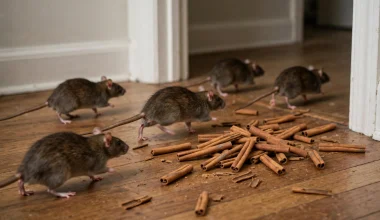
Finding rats around your home can be stressful. You might hear scratching behind the walls, notice droppings in the kitchen, discover chewed food packaging, or spot a rat running across the yard.
Once rats find a reliable source of food, water, and shelter, they can be surprisingly difficult to discourage.
The good news is that you can take several practical steps at home to make your property less attractive to them.
Some homemade methods use strong scents that people traditionally associate with keeping rodents away. Others focus on removing the things rats need to survive.
However, it is important to understand that homemade rat repellents are not a guaranteed way to eliminate rats.
Strong smells may temporarily discourage activity in a small area, but they rarely solve an established infestation.
The most dependable approach is to combine prevention, cleaning, sealing entry points, and appropriate rodent control.
Here are nine DIY rat repellent ideas and prevention methods worth considering.

1. Try a Peppermint Oil Scent Deterrent
Peppermint oil is one of the most popular ingredients in homemade rat repellent recipes. It has a strong, minty smell that some homeowners use around areas where they have noticed rodent activity.
Although there is limited evidence that peppermint oil reliably repels rats in real homes, you can try it as a supplementary scent deterrent.
What you need:
- A few drops of peppermint essential oil
- Cotton balls
- A small container or dish
How to use it:
- Add a few drops of peppermint oil to several cotton balls.
- Place them in a small container.
- Position the containers near suspected entry points or areas where rats have been seen.
- Replace the cotton balls when the scent fades.
Avoid placing them where children or pets can reach them. Concentrated essential oils can be harmful to animals, particularly cats, and may irritate skin or breathing passages. Do not place them near food preparation surfaces.
Remember that peppermint oil will not stop rats from entering through an open hole or remove a nest.
2. Use Garlic as a Strong-Smelling Deterrent
Garlic has a powerful smell, which is why it appears in many homemade pest-deterrent recipes. Some people use fresh garlic around outdoor areas where rodents have been noticed.
There is no strong evidence that garlic reliably keeps rats away, but it can be tried as a temporary, low-cost measure.
What you need:
- Two or three garlic cloves
- A small dish
- A knife
How to use it:
- Crush or lightly cut the garlic cloves to release their smell.
- Place them in a small dish.
- Keep the dish near an outdoor area where you have noticed rat activity.
- Replace the garlic when it dries out or begins to spoil.
Do not leave garlic where pets can eat it. Garlic is toxic to dogs and cats, and spoiled food can attract other pests.
This method is best treated as an experiment rather than a dependable rat-control solution.
3. Make Your Home Less Attractive With Vinegar Cleaning
Vinegar is commonly recommended in homemade rodent-repellent recipes because of its sharp smell. However, vinegar has not been proven to drive rats away or prevent them from returning.
Where vinegar can be useful is as part of ordinary household cleaning.
Rats may leave urine, droppings, and food residue along their usual routes. Cleaning contaminated areas properly helps remove dirt and food traces.
What you need:
- Household detergent
- Water
- Disposable gloves
- Paper towels
- A suitable household disinfectant
How to clean safely:
- Put on disposable gloves before cleaning.
- Keep children and pets away from the affected area.
- Do not sweep or vacuum dry rat droppings.
- Wet the droppings and contaminated surfaces with an appropriate disinfectant, following its label instructions.
- Allow the recommended contact time.
- Pick up the material with paper towels and dispose of it in a sealed bag.
- Clean the surface as directed by the disinfectant manufacturer.
Never mix vinegar with bleach or other cleaning products. Mixing household chemicals can release dangerous gases.
Important: Vinegar is not a substitute for disinfectant when cleaning areas contaminated by rat droppings or urine.
4. Seal Small Holes With Steel Wool and Sealant
One of the most effective ways to prevent rats from entering your home is to block the openings they use.
Rats can squeeze through surprisingly small gaps, especially around pipes, doors, windows, roof edges, and foundations. Even a clean home can attract rats if they have an easy way inside.
What you need:
- Coarse steel wool or suitable rodent-resistant mesh
- Appropriate sealant or repair material
- Gloves
- A flashlight
How to use it:
- Inspect the outside and inside of your home.
- Check around plumbing pipes, vents, doors, windows, and the roofline.
- Look for holes, gnaw marks, droppings, and greasy marks along walls.
- Fill small gaps with suitable rodent-resistant material.
- Secure the material with an appropriate sealant.
- Repair larger openings with durable materials such as metal mesh, mortar, or suitable building repairs.
Do not block ventilation openings that are needed for safe airflow. Use proper vent covers instead.
Steel wool alone may rust or be pulled out over time, so it should be secured and used as part of a durable repair.
5. Use Cloves as a Scent Deterrent
Cloves have a strong, distinctive smell. Some homemade pest-control recipes recommend using whole cloves or clove oil to discourage rodents.
However, there is not enough reliable evidence to say that cloves will keep rats away from a house.
If you want to experiment with the scent, use whole cloves rather than concentrated clove oil.
What you need:
- A small handful of whole cloves
- Small breathable sachets or containers
How to use it:
- Put a few whole cloves into a small breathable sachet.
- Place the sachets in areas where they cannot be reached by children or pets.
- Replace them when the scent becomes faint.
- Monitor the area to see whether rat activity changes.
Do not depend on cloves to protect stored food, electrical wiring, or other vulnerable areas.
6. Remove Food Sources Around Your Home
This is one of the most important steps in keeping rats away.
Rats are attracted to places where they can find food easily. Even small amounts of food left overnight can encourage them to return.
A homemade scent spray cannot compete with an easy supply of food.
Try these simple changes:
- Store rice, flour, cereal, and other dry foods in tightly sealed containers.
- Keep pet food in secure containers.
- Avoid leaving food scraps on kitchen counters.
- Wash dirty dishes instead of leaving them overnight.
- Empty rubbish bins regularly.
- Use bins with tight-fitting lids.
- Clean up spilled birdseed and animal feed.
- Pick up fallen fruit from the garden.
- Avoid leaving leftovers in open containers.
Pay particular attention to kitchens, storage rooms, garages, and outdoor feeding areas.
When rats cannot find food easily, your home becomes less attractive to them.
7. Keep Your Garden and Outdoor Areas Clean
Rats do not always enter a home because of something happening inside. Your garden, yard, or outdoor storage area may provide the shelter and food they need.
Overgrown plants, piles of wood, unused containers, and rubbish can create hiding places.
To make your outdoor space less attractive:
- Trim overgrown grass and vegetation near the house.
- Remove piles of rubbish and unused materials.
- Store firewood away from exterior walls and raise it off the ground.
- Keep compost bins properly covered and maintained.
- Remove fallen fruit and other food sources.
- Clear clutter around sheds and storage areas.
- Keep drains and outdoor rubbish areas clean.
Avoid creating piles of leaves or other garden waste directly against your house.
A tidy yard makes it easier to notice signs of rat activity and reduces the number of places where rodents can hide.
8. Fix Leaking Pipes and Remove Standing Water
Food is not the only thing rats need. They also need water.
A leaking pipe, dripping outdoor tap, uncovered water container, or poorly maintained drainage area can provide a convenient water source.
Walk around your home and look for:
- Leaking kitchen and bathroom pipes
- Water collecting beneath sinks
- Dripping outdoor taps
- Uncovered water storage containers
- Standing water in buckets or old tires
- Poor drainage around the building
Repair leaks where possible and empty containers that collect rainwater.
If you store water for household use, keep it covered with a secure lid.
Reducing available water will not eliminate an infestation by itself, but it is an important part of making your property less attractive to rodents.
9. Use Properly Placed Rat Traps When Necessary
If rats are already inside your home, scent deterrents are unlikely to solve the problem. You may need to use an appropriate trapping method.
Snap traps can be effective when selected and placed correctly. Follow the manufacturer’s instructions and use enough traps for the level of activity.
Tips for safer and more effective placement:
- Place traps along walls where rats travel.
- Position them near signs of activity, such as droppings or gnaw marks.
- Keep traps away from children and pets.
- Use enclosed, tamper-resistant trap stations where appropriate.
- Check traps regularly.
- Wear gloves when handling traps and disposing of captured rodents.
Do not use glue traps. They can cause prolonged suffering and may leave trapped animals exposed to injury.
If you have many rats, repeated sightings, or signs of nesting inside walls or ceilings, contact a qualified pest-control professional.
DIY Rat Repellent Ingredients: What Actually Works?
Many homemade rat-repellent recipes circulate online. Some recommend peppermint oil, garlic, cloves, cayenne pepper, ammonia, or vinegar.
But not every popular recipe has reliable evidence behind it.
Here is a quick look at common suggestions:
| Ingredient or method | What to know |
|---|---|
| Peppermint oil | Strong scent, but reliable real-world rat repellency is not established |
| Garlic | Traditional scent deterrent; effectiveness is unproven |
| Vinegar | Useful for some cleaning tasks, not a proven rat repellent |
| Cloves | Strong scent, but limited evidence of effectiveness |
| Cayenne pepper | Can irritate eyes, skin, and airways; not a dependable solution |
| Steel wool and sealant | Useful for blocking suitable entry gaps when properly installed |
| Removing food and rubbish | Helps make your home less attractive to rats |
| Properly placed traps | Can help control rats already inside |
Avoid using mothballs, poisons mixed into homemade food, or ammonia as DIY rat repellents. These can expose children, pets, and other animals to dangerous substances.
What Smells Do Rats Hate the Most?
Peppermint, cloves, garlic, and other strong-smelling ingredients are often described as scents rats hate.
However, there is no dependable list of smells that will consistently drive rats away from a property. A rat may avoid a strong smell temporarily but return when it finds food, water, or shelter.
If you experiment with a scent deterrent, use it only as an additional measure. Focus on removing food sources, sealing openings, and dealing with existing rodent activity.

How to Stop Rats From Coming Back
Getting rid of the rats you can see is only part of the job. You also need to prevent new ones from entering.
Follow this simple maintenance routine:
Every day
- Put food away after meals.
- Clean kitchen surfaces.
- Avoid leaving dirty dishes overnight.
- Secure rubbish.
Every week
- Check cupboards and storage areas.
- Look for droppings and gnaw marks.
- Inspect outdoor rubbish areas.
- Remove garden debris.
Every month
- Inspect walls, doors, vents, and pipe openings.
- Check the roofline and storage areas.
- Repair damaged screens and covers.
- Look for signs of new rodent activity.
Consistency matters. A clean kitchen, sealed food containers, and properly maintained building openings can make a significant difference.
Frequently Asked Questions
Does peppermint oil really keep rats away?
Peppermint oil has a strong smell and is commonly used in homemade rodent-deterrent recipes. However, there is limited reliable evidence that it consistently repels rats in real homes. It should not replace sealing entry points, removing food sources, or using appropriate rodent-control methods.
What homemade liquid keeps rats away?
There is no homemade liquid proven to reliably keep rats away. Peppermint oil and vinegar sprays are popular online suggestions, but their effectiveness is uncertain. Vinegar can be used for some ordinary cleaning tasks, while peppermint oil should be handled carefully around pets and children.
Will vinegar stop rats from coming into my house?
No. Vinegar has not been shown to reliably prevent rats from entering a home. It is better to focus on sealing gaps, securing food, managing rubbish, and removing places where rats can hide.
What is the fastest way to discourage rats?
Remove accessible food and water, secure rubbish, identify and seal entry points, and use suitable traps when rats are already inside. For a significant infestation, professional pest control is usually the better option.
Do rats hate the smell of garlic?
Garlic has a strong smell, but there is not enough reliable evidence to show that it consistently drives rats away. It should not be treated as a dependable rodent-control method.
Can I use essential oils around pets?
Be careful. Concentrated essential oils can be harmful to pets, especially cats. Do not place oil-soaked cotton balls where animals can reach them, and avoid applying essential oils to pets or their bedding. Ask a veterinarian before using them in a home with animals.
Why do rats keep coming back after I use repellent?
Rats may return because the original attraction is still there. Food, water, shelter, and easy access can encourage them to come back even after a strong smell has faded. Repellents do not remove nests or close entry holes.
Final Thoughts
DIY rat repellents can be tempting because they are inexpensive and easy to prepare. Peppermint, garlic, and cloves are popular choices, but none should be relied on as a complete solution to a rat problem.
The most dependable way to discourage rats is to remove what attracts them. Store food securely, keep rubbish covered, repair leaks, clear outdoor hiding places, and seal gaps around your home.
If rats are already nesting inside or you continue seeing them despite taking these steps, consider using suitable traps or contacting a pest-control professional.
A few homemade ingredients may make your home smell different, but good prevention and proper rodent control are what make the real difference.