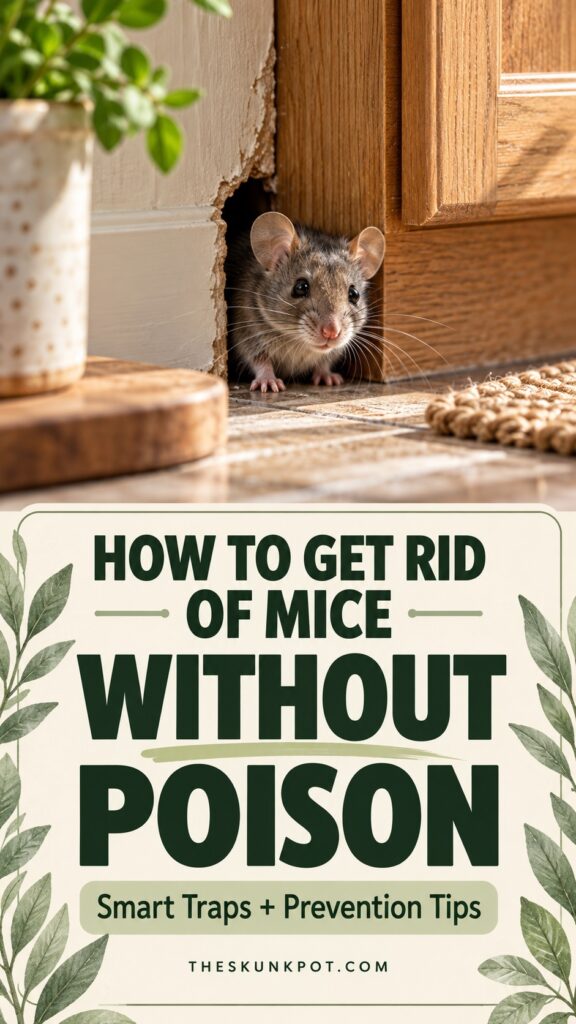
The first sign was a torn corner on a bag of rice.
I blamed the bag. Perhaps it had split while being carried home. Then I found three tiny black droppings behind the toaster and heard a quick scratching sound inside the kitchen wall after midnight.
That changed everything.
A mouse in the house can make you feel as though your own kitchen has turned against you. Every soft noise sounds suspicious.
You begin inspecting bread bags, looking beneath cabinets and wondering whether the shadow near the refrigerator just moved.
Here’s the frustrating part: spraying peppermint oil around the room and hoping for the best usually won’t solve an established mouse problem.
Mice stay where they can find food, water, warmth and hiding places. A smell they dislike may inconvenience them, but it rarely outweighs a reliable supply of crumbs.
The most effective natural approach combines four jobs:
- Find where the mice are entering.
- Remove their food and water.
- Trap the mice already indoors.
- Seal the openings so more cannot enter.
Home remedies and repellents can support that plan. They should not be the entire plan.
First, make sure you are dealing with mice
Mice are secretive. You may never see one running across the floor, especially during the early stages of an infestation.
Instead, look for the evidence they leave behind.
Common signs of mice include:
- Small, dark droppings shaped like grains of rice
- Scratching or rustling inside walls and ceilings
- Food packages with gnawed corners
- Shredded paper, fabric or insulation
- A stale or musky odor in enclosed areas
- Greasy rub marks along walls
- Tiny paw prints in dusty spaces
- Damage around wiring, cardboard or stored belongings
- Pet food disappearing overnight
- A mouse seen indoors, particularly during daylight
Fresh droppings usually look dark and moist. Older droppings become dry and faded. Do not touch them with bare hands, and do not sweep or vacuum them while dry.
Mice may carry germs even when they appear healthy. The Centers for Disease Control and Prevention recommends removing food, water and shelter while sealing entry points, trapping remaining rodents and cleaning contaminated areas safely.
If the droppings are much larger, you hear heavy movement or you find sizeable gnaw marks, you may be dealing with rats. Follow the more targeted advice in how to get rid of rats in the house naturally because trap size and placement will be different.
Do not start by sweeping the droppings
I know. You see mouse droppings on the counter, and your first instinct is to grab a broom or vacuum cleaner.
Pause.
Sweeping or vacuuming dry rodent waste can send contaminated dust into the air. The CDC advises wetting droppings and urine with a disinfectant before wiping them up.
Here is the safer method:
- Open nearby doors and windows and allow the area to air out.
- Keep children and pets away.
- Put on rubber or plastic gloves.
- Spray the droppings and surrounding area with an EPA-registered disinfectant.
- Leave the surface wet for the contact time stated on the product label.
- Pick up the waste with paper towels.
- Place the used towels in a covered trash container.
- Disinfect the surface again.
- Wash your gloved hands before removing the gloves.
- Remove the gloves and wash your bare hands thoroughly.
If you use a bleach solution, follow current public-health guidance and the bleach label. Never mix bleach with vinegar, ammonia or another cleaner.
Heavy infestations inside attics, crawl spaces, heating systems or long-closed buildings require extra precautions. A pest-control or remediation professional may be the safer choice.
Find the route before you chase the mouse
A mouse does not need an open door. It can squeeze through a surprisingly small gap.
Walk slowly around the exterior of the house during daylight. Then inspect the same areas from inside.
Concentrate on:
- Gaps around water pipes
- Openings around electrical cables
- Spaces beneath exterior doors
- Damaged foundation vents
- Gaps where siding meets the foundation
- Holes around air-conditioning lines
- Garage-door corners
- Broken window screens
- Roof and soffit gaps
- Openings beneath kitchen cabinets
- Spaces behind appliances
- Utility rooms and laundry areas
Use a flashlight. Look for droppings, greasy marks, gnawing or shredded nesting material near the opening.
A temporary way to confirm activity is to place a light dusting of flour on a piece of cardboard beside the suspected route. Check it the next morning for tiny tracks. Do not spread flour directly across food-preparation surfaces or throughout the room.
You can also place a crumpled piece of paper loosely inside a hole. If it has been pushed aside by morning, something may be using the opening.
Do not seal every hole immediately if mice are clearly living inside the walls. You want to trap the indoor mice while closing the routes that allow new ones to enter. Otherwise, a trapped mouse may chew another way out or die in an inaccessible space.
Seal the openings mice use
For small holes, pack the opening tightly with copper mesh or coarse steel wool, then hold it in place with caulk or another suitable sealant.
Foam by itself is often not enough. Mice can chew through many soft materials. Foam works better when paired with a chew-resistant barrier.
For larger openings, use materials such as:
- Hardware cloth
- Sheet metal
- Metal flashing
- Cement
- Lath screen
- Durable door sweeps
- Appropriate vent covers
The CDC recommends steel wool secured with caulk or foam for smaller holes and metal, cement or hardware cloth for larger openings.
Check repairs regularly. A hurried patch that loosens after two rainy days is not much of a patch.
Pay special attention to the gap beneath the kitchen sink. Pipes often pass through openings much wider than necessary, giving mice an easy route into a cabinet filled with darkness, warmth and cleaning rags.
Remove the free buffet
A mouse does not need a full plate of food. A scattering of cereal beneath the refrigerator may keep it returning.
For the next few weeks, treat every crumb as an invitation.
Store dry food in containers with tight-fitting lids. Thin plastic bags and cardboard boxes are easy to chew. Use thick plastic, glass or metal containers where practical.
Move these foods into sealed containers:
- Rice
- Flour
- Cereal
- Pasta
- Bread
- Nuts
- Seeds
- Pet food
- Birdseed
- Dried fruit
- Snacks
- Animal feed
Wash dishes before bed. Wipe beneath the toaster and around the stove. Sweep beneath the table, then check the less obvious places.
Pull the refrigerator forward if you can do so safely. You may be amazed, and slightly horrified, by what has collected underneath it.
At night:
- Empty open trash containers.
- Wipe the counters.
- Store fruit appropriately.
- Put away pet food.
- Do not leave pet bowls filled overnight.
- Fix dripping taps.
- Dry water around the sink.
- Rinse food containers before recycling them.
This may feel like ordinary cleaning, but it changes the survival value of your home. A mouse will tolerate a lot for easy food. Take away the food, and your traps become far more interesting.
The best trap is usually simpler than the internet makes it look
Search for “DIY mouse trap,” and you will find buckets, rolling cans, bottles, spoons, ramps and balancing pieces of cardboard.
Some designs are clever. Many are unreliable. A few can injure an animal without killing it, allow it to escape or create unnecessary contact with urine and droppings.
Traditional snap traps remain one of the most practical choices for an indoor mouse problem. Use snap traps and advises against glue traps and live traps because frightened rodents may urinate, increasing potential exposure to disease.
The DIY part that matters most is not inventing a complicated trap. It is creating safe placement, using the right bait and setting enough traps.
Make a simple DIY covered trap station
If you have children or pets, an exposed snap trap is not acceptable.
The safest choice is a tamper-resistant trap station designed for the trap you are using. If you cannot get one immediately, you can create a temporary covered tunnel for use only in a locked, inaccessible room.
You will need:
- A strong box or rigid container
- A properly sized snap trap
- A utility knife
- Strong tape
- A marker
- Bait
- Disposable gloves
Cut two small mouse-sized openings on opposite sides of the container. The trap should fit inside without touching the trigger.
Position the snap trap so the baited trigger faces the wall or one of the entry holes. Secure the container so it cannot be tipped or dragged.
Clearly mark it: MOUSE TRAP. DO NOT TOUCH.
This temporary enclosure does not make the trap childproof or pet-proof. Place it only where children and animals cannot reach it. A purpose-built tamper-resistant station is much safer for accessible parts of the home.
Never place a trap where a curious hand can enter the opening.
What bait works best?
Peanut butter is popular because it smells strong and sticks to the trigger. The mouse must work at it rather than carrying the entire bait away.
Use only a pea-sized amount. A large blob allows the mouse to nibble from the edge without pressing the trigger.
Other possible baits include:
- A small piece of nut
- Oats pressed into peanut butter
- Chocolate spread
- A tiny piece of dried fruit
- Soft nesting material, such as cotton, when food bait is being ignored
The best bait may be whatever the mouse is already stealing.
If you find gnawed pet-food bags, press one piece of that food into a thin smear of peanut butter. If cereal is disappearing, use a small cereal fragment.
Wear gloves while handling traps and bait. This reduces direct contact with contaminated surfaces and keeps strong food or fragrance smells off the equipment.
Trap placement matters more than fancy bait
Mice usually travel beside walls and objects rather than running through the middle of a bright room.
Place traps:
- Behind the refrigerator
- Beside the stove
- Beneath the kitchen sink
- Along pantry walls
- Behind furniture
- Near droppings
- Beside gnawed food packages
- Along garage walls
- Near suspected entry points
- Inside inaccessible cabinets
For a classic snap trap, place it at a right angle to the wall, with the baited trigger end touching the wall. A mouse following the edge then reaches the trigger first.
Use several traps. One trap behind the fridge is not a control plan for mice moving between the kitchen, pantry and laundry room.
Space traps closely in active areas. Check them every morning and again before bed.
Continue trapping until you have gone at least one full week without catching a mouse or finding fresh droppings, urine spots or gnaw marks.
That is also the CDC’s general stopping point for determining whether activity has ended.
Are homemade bucket traps a good idea?
Bucket traps receive a lot of attention online because they look cheap and inventive.
I would not make them the first choice inside a family home.
A poorly designed bucket trap may let mice escape, cause prolonged distress or expose you to urine and feces from a frightened live animal.
Adding water creates a drowning trap, which is inhumane and may be prohibited by local animal-welfare rules.
A live-capture bucket also leaves you with the problem of handling and releasing the mouse. Release may be restricted locally, and a mouse released nearby may return if the house has not been sealed.
Use effective snap traps placed inside secure stations instead. They are easier to monitor, easier to position along travel routes and less likely to turn into a messy overnight experiment.
Home remedies that help, and those that mostly smell impressive
People often want a natural mouse repellent because traps feel unpleasant. That is understandable. Unfortunately, many remedies sound better than they perform.
Peppermint oil
Peppermint oil has a strong scent that may discourage a mouse from lingering in a small area for a short time.
You can place a few drops on a cotton ball near a suspected entry point after the hole has been sealed. Keep essential oils away from children and pets, and avoid placing soaked cotton on painted, polished or food-contact surfaces.
Do not rely on peppermint oil to remove mice from an established nest. The smell fades, the mouse adapts and the food in your pantry remains more valuable.
Peppermint oil is a supporting repellent, not an eviction notice.
Vinegar
The sharp odor of vinegar may temporarily disturb mice, but it does not provide dependable control.
Use vinegar as a general cleaner only where it is safe for the surface. Do not pour it into walls, electrical openings or ventilation systems.
Never mix vinegar with bleach.
Cayenne pepper and chili powder
Hot pepper may irritate a mouse’s nose, eyes and paws. Loose powder can also irritate children, pets and anyone cleaning the area.
It may blow into the air, stain surfaces and create a bigger problem than the mouse itself. Skip scattered pepper powders indoors.
Cloves and cinnamon
Cloves and cinnamon smell pleasant to many people and may make a small space less attractive to mice. The effect is likely to be temporary.
Use them for fragrance if you enjoy the smell. Do not count them as your main form of mouse control.
Ammonia
Ammonia is sometimes promoted as a predator-urine substitute. It produces strong fumes and can irritate the eyes, lungs and skin.
Do not leave open bowls of ammonia around the house. Never mix ammonia with bleach. There are safer ways to make a room unattractive to mice.
Mothballs
Mothballs are pesticides intended for specific labeled uses. They should not be scattered in kitchens, attics, wall cavities, gardens or open rooms as mouse repellent.
The fumes can be harmful, and using a pesticide outside its label directions can put people and animals at risk.
Dryer sheets
Dryer sheets may smell strong when first opened, but there is little reason to expect them to stop a hungry mouse from entering a warm pantry.
They may make a drawer smell like laundry. They will not seal the hole behind the cabinet.
Ultrasonic repellents
Results vary, and mice may become accustomed to repeated sounds. Furniture, walls and cabinets can also block the signal.
An ultrasonic device should never replace sealing, sanitation and trapping. If you already own one, treat it as an extra measure while doing the work that actually removes access.
Repellents work better outside the problem area
Repellents are most useful after food has been removed and entry holes have been closed.
For example, you might:
- Clean and empty a lower cabinet.
- Seal the pipe opening at the back.
- Place traps along the nearby wall.
- Use a lightly scented peppermint cotton ball inside the cleaned cabinet.
- Check daily for new droppings.
The repellent makes the cabinet less appealing. The seal blocks the route. The trap deals with any mouse already indoors.
That combination makes sense.
Spraying essential oil around an open hole while leaving a bag of dog food beside it does not.
What about poison?
Poison can seem easier because you do not need to face the trap.
It brings serious drawbacks.
A poisoned mouse may die inside a wall and create a lasting odor. Children, pets and wildlife may also be harmed if bait is used incorrectly or if another animal eats the poisoned rodent.
If an infestation continues despite sealing, sanitation and trapping, contact a licensed pest professional.
When a rodenticide is used, choose only an EPA-registered product and follow its label exactly. Consumer rodent bait must remain secured inside the bait station supplied with it. Never place loose homemade poison around the home.
The EPA advises keeping bait stations and pesticides away from children and pets, storing them away from food and promptly removing dead rodents to reduce risks to other animals.
Do not make mouse poison using plaster, cement, baking soda, antifreeze or other household substances. These mixtures can harm children, pets and wildlife while failing to solve the infestation.
How to dispose of a trapped mouse safely
Do not pick up a dead mouse with bare hands.
Put on rubber or plastic gloves. Spray the mouse, trap and surrounding area with disinfectant until wet. Allow the product to sit for the label’s required contact time.
If you are discarding the trap, place the mouse and trap into a plastic bag. Seal it, place it inside a second bag and seal that bag too.
Put the double bag in a covered outdoor trash container, following local waste rules.
If the trap will be reused, hold it over the open bag and release the mouse into the bag without touching it. Disinfect the trap according to the manufacturer’s instructions.
Clean your gloved hands before removing the gloves. Then wash your bare hands with soap and warm water.
Clean the hidden areas after activity stops
Once you stop seeing new signs, inspect the places mice may have visited.
Check:
- Pantry shelves
- Drawer interiors
- Beneath appliances
- The cabinet under the sink
- Storage boxes
- Linen closets
- Garage shelving
- The space beneath the sofa
- Attic insulation
- Laundry-room corners
Discard food in packages that have been gnawed, soiled or opened by mice. Do not try to save the untouched half of a contaminated bag.
Wash hard surfaces with an appropriate cleaner and disinfectant. Follow the label, including the stated contact time.
Launder washable fabrics that may have been contaminated. Items with heavy damage or nesting material may need to be discarded.
Cardboard attracts mice because it offers both hiding space and nesting material. Replace frequently used cardboard storage boxes with sturdy containers that have secure lids.
Make the house harder to reinvade
Mouse prevention is mostly a collection of small, unglamorous habits.
Trim dense vegetation away from the building. Remove rubbish, unused materials and stacked clutter beside exterior walls.
Keep firewood raised from the ground and away from the house. Store animal feed and birdseed in sealed containers.
Repair leaking outdoor taps. Keep garbage-bin lids closed. Clean spilled seed beneath bird feeders.
Inside the home:
- Inspect door sweeps.
- Seal pipe gaps.
- Clean beneath appliances.
- Rotate pantry stock.
- Repair damaged screens.
- Avoid storing food in cardboard.
- Put pet food away overnight.
- Check seldom-used rooms regularly.
If you are also dealing with insects, do not assume the problems are unrelated. Mice may enter through the same structural gaps used by other pests.
When home remedies are not enough
Call a pest-control professional if:
- You continue seeing fresh droppings after a week of trapping.
- Mice are active during daylight.
- You hear movement throughout several walls or ceilings.
- The infestation is in an apartment building or shared property.
- Wiring has been damaged.
- You smell a dead animal inside a wall.
- Mice have entered heating or ventilation systems.
- Droppings cover a large area.
- The infestation is in a commercial kitchen.
- Someone in the home has a weakened immune system.
- You cannot place traps away from children or pets.
- You suspect rats rather than mice.
A good professional should inspect the building, identify entry points and explain the exclusion work needed. Killing mice without sealing the house creates an empty space for the next group.
Frequently asked questions
What is the fastest natural way to get rid of mice?
The fastest practical approach is to remove accessible food, set several snap traps along active walls and seal entry points with chew-resistant materials.
Natural repellents may help make a cleaned area less appealing, but they rarely remove an established infestation by themselves.
What smell do mice hate the most?
Peppermint, clove and other strong scents may bother mice temporarily. No household smell is guaranteed to drive mice out of a house containing food, water and shelter.
Use scent repellents only after cleaning and sealing the area.
Will peppermint oil get rid of mice permanently?
No. Peppermint oil loses strength as it evaporates, and a mouse may simply take another route.
It can support a prevention plan, but permanent control depends on exclusion, sanitation and trapping.
How many traps should I set?
Use more than one. Place several traps wherever you find droppings, gnaw marks or greasy travel marks.
A larger or multi-room infestation requires more traps. Check them daily and continue until no new activity appears for at least a week.
Why is the bait gone but the trap did not snap?
You may be using too much bait, or the mouse may be reaching it from the side.
Use a pea-sized amount of sticky bait and place the trigger end directly against the wall. Make sure the trap is functioning properly.
Are glue traps a good DIY option?
No. Glue traps can leave a mouse alive and struggling. Frightened rodents may urinate, increasing the chance of contact with contaminated material.
A properly placed snap trap inside a secure station is a better choice.
Can mice leave on their own if there is no food?
Removing food makes the house less attractive, but it does not guarantee that mice will leave. They may have stored food or may move between your home and an outdoor source.
Combine food removal with trapping and sealing.
Does having mice mean the house is dirty?
Not necessarily. Mice enter clean homes too, especially when cold weather or nearby construction disrupts their habitat.
However, crumbs, open pet food and clutter can help them remain hidden and well fed.
Can one mouse mean there are more?
It can. You may have seen a single wandering mouse, but mice reproduce quickly and remain hidden.
Treat one sighting seriously. Inspect for droppings, place traps and look for entry points.
How long does it take to get rid of mice?
A small problem may improve within several days when traps are placed correctly and entry holes are sealed. A larger infestation can take several weeks.
Continue monitoring even after the noise stops. The absence of one mouse does not prove the house is sealed.
The plan that actually works
If you want to get rid of mice without filling the house with poison, keep the plan straightforward.
Clean up food. Remove water. Reduce clutter. Find the holes. Seal them with materials mice cannot easily chew. Place several snap traps along the routes the mice already use.
Use peppermint oil or another mild repellent only as an extra layer after those jobs are done.
There is no single kitchen ingredient that makes a mouse problem disappear overnight. Honestly, that would be lovely. The reliable solution is less dramatic: block the door, remove the meal and trap the mice that remain.
Once you do those three things together, the scratching usually stops, the pantry stays untouched and every tiny sound after midnight no longer feels like the beginning of another invasion.