Finding mouse droppings in your kitchen cupboard, hearing scratching sounds behind the refrigerator, or discovering chewed food packages can be frustrating.
If you prefer to start with a simple household solution before reaching for pest-control products, you may have heard that cinnamon sticks can help keep mice away.
Cinnamon has a strong, distinctive aroma, which makes it an appealing ingredient for homemade pest-control ideas. Whole cinnamon sticks are also easy to handle, inexpensive, and less messy than loose powder.
But do cinnamon sticks actually repel mice? The honest answer is that there is not enough reliable evidence to say that placing cinnamon sticks around your home will prevent or eliminate a mouse problem.
University extension guidance warns that scent-based repellents are generally unreliable for managing mice. Still, if you enjoy experimenting with household remedies, you can try cinnamon as an optional measure while addressing the things that truly attract rodents.
In this guide, you’ll learn seven ways to place cinnamon sticks around your home, where to use them, what precautions to take, and which proven steps will help keep mice out for good.
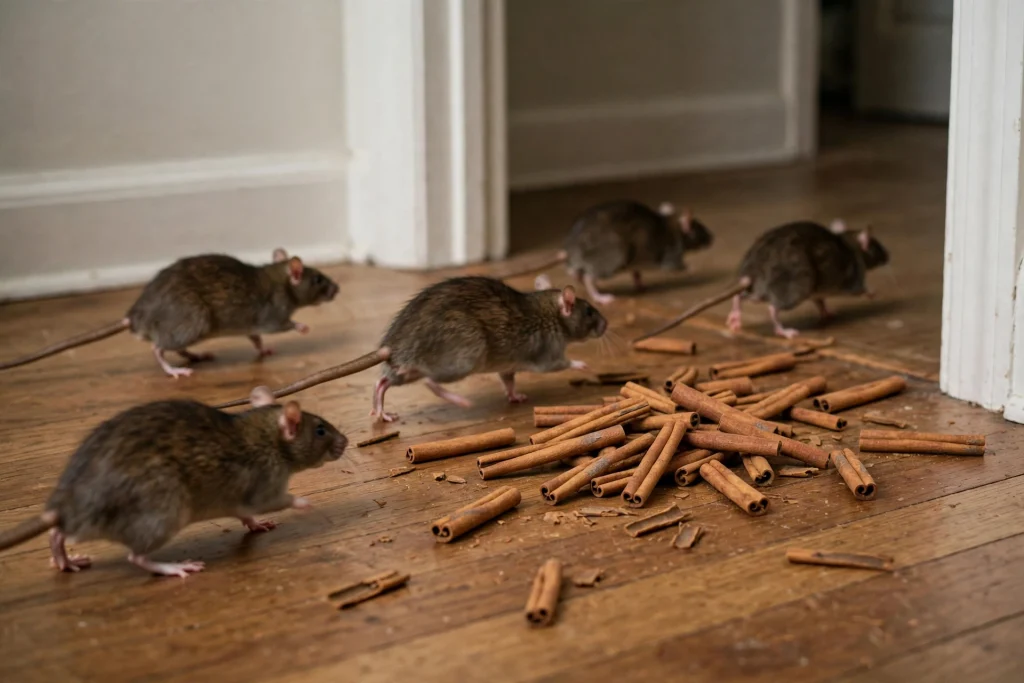
Can Cinnamon Sticks Really Keep Mice Away?
Cinnamon contains aromatic compounds, including cinnamaldehyde, that give the spice its characteristic smell. Because mice have a well-developed sense of smell, many homemade pest-control guides suggest that strong scents may discourage them from entering certain areas.
However, a strong smell does not automatically make something an effective mouse repellent. There is insufficient evidence that ordinary cinnamon sticks placed around a house reliably drive mice away, prevent them from entering, or eliminate an existing infestation.
Mice are mainly interested in finding food, water, shelter, and safe places to nest. If your kitchen provides accessible food and your walls or cupboards offer hiding places, a few cinnamon sticks are unlikely to solve the problem.
The best approach is to treat cinnamon as an optional household experiment, not your main mouse-control method. Combine any scent-based approach with proper food storage, sealing entry holes, cleaning, and trapping when necessary.
What You’ll Need to Try Cinnamon Sticks Around Your Home
If you want to try this method, gather a few basic supplies.
- Whole cinnamon sticks
- Small breathable fabric or mesh sachets
- String or reusable ties
- A few small containers, if needed
- A flashlight for inspecting corners and potential entry points
- A notebook or phone to record where you notice mouse activity
You do not need to buy expensive cinnamon products or specialized equipment. Ordinary culinary cinnamon sticks are sufficient for experimenting with the scent.
Avoid adding concentrated cinnamon essential oil unless you understand how to handle it safely. Essential oils are much more concentrated than whole spices and may irritate skin or cause harm if swallowed. Keep them away from children and pets.
7 Ways to Use Cinnamon Sticks to Keep Mice Away
These ideas show how to position cinnamon sticks in areas where people commonly notice mouse activity. Remember that the placement suggestions are practical experiments, not scientifically established mouse-repellent treatments.
1. Place Cinnamon Sticks Near Kitchen Cupboards
Kitchen cupboards are common places to discover signs of mice because they may contain cereals, flour, rice, snacks, and other food sources.
If you want to try cinnamon sticks, place two or three in a small breathable sachet and position it in an empty corner of a cupboard away from food and food-preparation surfaces.
How to do it:
- Remove food packages from the affected cupboard.
- Inspect the shelves for droppings, gnaw marks, or damaged packaging.
- Clean the affected area safely before returning food.
- Transfer dry goods into sturdy, tightly sealed containers.
- Place the cinnamon sachet in an unused corner, away from food and children’s reach.
Do not place cinnamon sticks directly beside exposed food or assume that their scent makes food safe from contamination.
An important tip: If you continue finding droppings, damaged packages, or fresh gnaw marks, focus on sealing entry points and setting suitable traps rather than adding more cinnamon.
2. Try Cinnamon Sachets Near Suspected Entry Points
Mice can squeeze through surprisingly small openings. A gap around a pipe, a damaged door seal, or a crack near the foundation may give them access to your home.
You can place a cinnamon sachet near a suspected entry point if you want to test whether the aroma has any noticeable effect. However, the sachet will not block the opening or reliably prevent mice from passing through it.
For a more effective solution, inspect the area carefully.
Look for:
- Gaps around water pipes and electrical cables
- Cracks in walls and foundations
- Openings beneath exterior doors
- Damaged window screens
- Gaps around vents and utility lines
House mice can enter through openings approximately 1/4 inch (6 millimeters) wide. Seal suitable gaps with durable, rodent-resistant materials, such as metal mesh combined with an appropriate sealant.
Cinnamon may add a pleasant scent to the area, but physically closing the opening is the important step.
3. Put Cinnamon Sticks in a Garage or Storage Room
Garages, sheds, and storage rooms can attract mice when they contain pet food, birdseed, cardboard boxes, fabrics, or other nesting materials.
If you want to try cinnamon sticks in these spaces, put a few in a breathable pouch and place it on a stable shelf near an area where you have noticed mouse activity.
Before doing so, check the room for other things that could attract rodents.
- Store animal feed in sturdy, tightly sealed containers.
- Remove food wrappers and other rubbish.
- Keep stored items organized and off the floor when possible.
- Reduce piles of cardboard, paper, and unused fabric.
- Inspect the walls, doors, and corners for holes.
Avoid scattering loose cinnamon powder over stored belongings. It can create a mess, and there is no good evidence that doing so will prevent mice from nesting.
If you store a vehicle, lawn equipment, or machinery in the garage, check for rodent damage periodically. Mice can chew wiring and other materials, potentially causing costly damage.
4. Try a Cinnamon Sachet Under the Kitchen Sink
The space beneath a kitchen sink is another place worth inspecting when you suspect mice. Plumbing openings can create small gaps, while cleaning supplies and stored bags can provide places to hide.
To try this cinnamon method, place a sachet in an accessible corner after inspecting the area.
First, remove unnecessary items and look for:
- Droppings or gnaw marks
- Food scraps or spilled pet food
- Openings around water pipes
- Damp materials or leaks
- Torn bags and cardboard packaging
Clean the area, repair leaks, and seal any openings using appropriate materials.
Keep the sachet away from cleaning chemicals, water, and anything that children or pets could reach. Do not place cinnamon directly on pipes or plumbing fittings.
If mice have been entering through a gap around a pipe, sealing that gap will do far more to prevent their return than relying on a strong smell.
5. Place Cinnamon Sticks Near Pantry or Pet-Food Storage
Pet food, birdseed, and dry food products can provide an easy meal for mice. Even a small amount left in an open bag may encourage rodents to return.
You can place a cinnamon sachet near the outside of a storage cabinet as an optional experiment, but keep it separate from food and feeding equipment.
Instead, make food storage your priority.
- Transfer dry pet food and grains into secure containers.
- Clean up crumbs and spilled food promptly.
- Avoid leaving pet food out overnight when practical.
- Empty rubbish regularly and use bins with secure lids.
- Inspect storage areas for signs of gnawing or droppings.
Do not attach cinnamon sachets directly to pet-food containers or put loose cinnamon into food bowls. Cinnamon is not a proven way to protect stored food from mice.
If fresh droppings appear near food storage, check for contamination and discard food that may have been exposed to rodent waste.
6. Use Cinnamon Sticks in a Breathable Sachet Rather Than Scattering Them
A sachet is a simple way to keep cinnamon sticks together without leaving loose pieces or powder around your home.
To make one, place two or three cinnamon sticks inside a small breathable fabric pouch and secure the opening with string or a reusable tie.
Position the pouch in a dry location where you want to experiment with the scent, such as an empty storage shelf or a corner of a garage.
Check the sachet periodically. If it becomes damp, dirty, or moldy, discard it. Replace it if the aroma fades and you still want to use it for its fragrance.
There is no scientifically established replacement schedule for cinnamon sachets as mouse repellents, because their effectiveness against household mice has not been reliably demonstrated.
Do not treat a strong cinnamon smell as proof that your home is mouse-free. Continue checking for droppings, gnaw marks, and other signs of rodent activity.
7. Combine Cinnamon With Better Mouse-Prevention Habits
If you like the idea of using cinnamon sticks, the most useful approach is to combine the experiment with practical prevention measures.
For example, you might place a cinnamon sachet on an empty storage shelf while also sealing nearby openings, cleaning up food scraps, and checking for mouse activity.
The prevention measures are the important part.
Try this simple routine:
- Inspect the kitchen and storage areas for droppings and damaged packaging.
- Seal food in sturdy containers.
- Clean up crumbs and food spills.
- Reduce clutter and nesting materials.
- Seal gaps around pipes, doors, windows, and foundations.
- Place suitable snap traps in areas where you have seen mouse activity, following the manufacturer’s instructions.
- Check regularly for new signs of mice.
If the activity continues, consider professional pest control. A well-planned combination of exclusion, sanitation, and trapping is much more dependable than relying on cinnamon alone.
What About Cinnamon Powder and Cinnamon Oil?
Cinnamon sticks are not the only cinnamon-based remedy you’ll find online. Some people also recommend cinnamon powder and cinnamon essential oil.
Cinnamon powder
Powdered cinnamon has a strong aroma and is easy to sprinkle, but it can be messy and may irritate the nose or eyes if it becomes airborne. There is no reliable evidence that spreading cinnamon powder around a home will eliminate mice or keep them from returning.
If you want to use cinnamon for its fragrance, a contained sachet is generally tidier than scattering powder across floors or shelves.
Cinnamon essential oil
Cinnamon essential oil is concentrated, so a small amount can have a much stronger aroma than a whole stick. However, a stronger aroma does not establish that it will repel mice effectively.
Concentrated oils can irritate skin and may be harmful if swallowed. Do not apply them to pets, food, food-preparation surfaces, or areas where children can access them. Avoid spraying oil into the air or using a diffuser as a substitute for proper pest control.
For a simple household experiment, whole cinnamon sticks are easier to handle. For actual mouse prevention, focus on sealing openings and removing food sources.
What Actually Keeps Mice Out of Your Home?
If you are seeing mice regularly, the most effective response is to remove the conditions that allow them to survive indoors and prevent new ones from entering.
1. Seal Small Holes and Gaps
Inspect both the inside and outside of your home. Pay close attention to gaps around pipes, cables, vents, doors, windows, and foundations.
Mice can squeeze through openings around 1/4 inch wide. Use suitable rodent-resistant materials to close these gaps, and repair damaged door seals or screens.
Ordinary expanding foam or soft plastic alone may be chewed through, so choose materials appropriate for the size and location of the opening.
2. Remove Food Sources
Keep dry food, grains, cereal, pet food, and other edible items in secure containers.
Clean up crumbs, wipe food-preparation surfaces, and avoid leaving dirty dishes or uncovered food out overnight. Use rubbish bins with secure lids and remove waste regularly.
These steps make your home less attractive to mice, although cleanliness alone may not eliminate an established infestation.
3. Reduce Clutter and Nesting Materials
Mice often hide in quiet, undisturbed spaces containing cardboard, paper, fabric, and other materials they can use to build nests.
Organize cupboards, storage rooms, garages, and utility spaces. Remove unnecessary cardboard and inspect stored belongings for signs of chewing or nesting.
Keep items in sturdy containers where practical, and avoid storing piles of unused materials directly against walls.
4. Use Appropriate Traps
When you find evidence of mice indoors, suitable snap traps can help reduce their numbers.
Place traps along walls and near areas where you have seen droppings, gnaw marks, or other signs of activity. Follow the instructions supplied with the trap, choose the correct type for the rodent, and keep traps away from children and pets.
Check them regularly and continue monitoring for fresh signs of activity. If you are dealing with a large or persistent infestation, contact a pest-control professional.
5. Clean Mouse Droppings Safely
Mouse droppings and urine can carry germs, so it is important to clean contaminated areas carefully.
Do not sweep or vacuum dry droppings, urine, or nesting material. The CDC recommends wearing gloves, thoroughly wetting the waste with an appropriate disinfectant, allowing the required contact time, and wiping it up with paper towels before disinfecting the surrounding surfaces. <Cite refs={[“turn849881search0”]}/>
If you find a large amount of rodent waste or a nest in an enclosed area, follow official cleanup guidance or seek professional assistance.
Frequently Asked Questions
Do cinnamon sticks keep mice away instantly?
No. There is no reliable evidence that cinnamon sticks instantly repel household mice. Their aroma may be noticeable, but it should not be relied on to stop mice from entering a home or eliminate an infestation.
Where should I put cinnamon sticks if I want to try them?
You can experiment with a breathable sachet in a dry corner of a cupboard, garage, storage room, or under-sink cabinet. Keep it separate from food, children, pets, and cleaning chemicals. These are suggested locations for trying the scent, not proven mouse-repellent zones.
How many cinnamon sticks do I need?
There is no scientifically established number that will repel mice. If you want to try the method for its fragrance, start with two or three sticks in a small sachet. Adding more does not guarantee better mouse control.
How often should I replace cinnamon sticks?
No evidence-based replacement schedule exists for using cinnamon sticks as a mouse repellent. You can replace them when their aroma fades if you are using them for fragrance, but do not assume that a fresh scent will prevent mice from entering.
Is cinnamon oil better than cinnamon sticks?
Cinnamon oil is more concentrated, but that does not mean it is a proven or reliable mouse repellent. It also presents greater handling concerns because concentrated essential oils can irritate skin and may be harmful if swallowed.
Can I use cinnamon sticks in my kitchen?
You can keep a cinnamon sachet in an unused, dry area if you wish, but keep it away from exposed food and food-preparation surfaces. More importantly, store food securely, clean spills, seal entry points, and monitor for mouse activity.
What if I still see mice after using cinnamon?
Do not keep relying on the scent. Inspect the property for entry holes, remove accessible food and nesting materials, and use suitable traps. Persistent mouse activity may require professional pest-control assistance.
Is cinnamon safer than mouse poison?
Whole cinnamon sticks used as a household spice avoid the risks associated with rodenticide products, but they are not an effective substitute for controlling an infestation. If you choose to use rodenticides, follow the label carefully and keep them in appropriate secured bait stations away from children, pets, and wildlife.
Final Thoughts
Cinnamon sticks are an inexpensive household item, and you may enjoy using them for their warm fragrance. If you want to experiment with placing them near cupboards, storage areas, or suspected mouse pathways, a simple sachet is an easy way to start.
Just remember that cinnamon sticks are not a proven solution for getting rid of mice. A pleasant-smelling room can still have an active mouse problem.
For lasting results, seal entry holes, secure food, remove nesting materials, clean contaminated areas safely, and use appropriate traps when needed. Those steps address the reasons mice enter and stay in your home.
You can try cinnamon as an extra measure, but make exclusion, sanitation, and effective trapping the foundation of your mouse-control plan.