Have you ever noticed tiny flies hovering around your fruit bowl, crawling near the kitchen sink, or appearing every time you bring home fresh bananas?
Fruit flies can be surprisingly annoying, especially when you seem to clean the kitchen every day and they keep coming back.
The good news is that you don’t need to buy an expensive pest-control product to start dealing with them.
A simple DIY fruit fly trap with apple cider vinegar uses a few common household supplies and takes only a couple of minutes to prepare.
Apple cider vinegar has a fermented, fruity smell that attracts fruit flies. When you combine it with a little dish soap, the flies that land in the liquid are more likely to sink rather than escape.
In this guide, you’ll learn how to make an apple cider vinegar fruit fly trap, where to place it, how to make it work better, and what to do if those little flies keep returning.
Why Does Apple Cider Vinegar Attract Fruit Flies?
Fruit flies are attracted to the smell of ripening and fermenting fruits. That is why you often see them around bananas, apples, tomatoes, fruit juice, and food scraps.
As fruit ripens and begins to ferment, it releases odors that can attract these tiny insects. Apple cider vinegar has a similar fermented smell, making it a useful bait for a homemade trap.
The vinegar draws fruit flies toward the container, while the dish soap helps prevent them from escaping once they land in the liquid.
However, there is one important thing to remember: a trap catches adult flies, but it does not automatically remove the source of the infestation.
If overripe fruit, food residue, or other breeding spots remain in your kitchen, new flies may continue to appear.
That’s why the best approach combines a homemade trap with a little cleaning and prevention.
What You’ll Need to Make a DIY Fruit Fly Trap
You probably already have most of these supplies in your kitchen.
Ingredients and supplies:
- 2–3 tablespoons of apple cider vinegar
- 2–3 drops of liquid dish soap
- A small glass, cup, or jar
- Plastic wrap
- A rubber band
- A toothpick or similar tool for making small holes
You don’t need a special jar or an expensive brand of vinegar. A clean drinking glass or a small recycled food jar will work.
If you don’t have plastic wrap, don’t worry. You can make a simple open-cup version or use a paper cone to create an alternative trap.
How to Make a Fruit Fly Trap With Apple Cider Vinegar
This is a straightforward method that takes around five minutes to prepare.
Step 1: Pour Apple Cider Vinegar Into a Cup
Pour 2–3 tablespoons of apple cider vinegar into your glass or jar.
You only need enough to create a shallow pool at the bottom. Filling the container halfway isn’t necessary, and leaving plenty of space above the liquid gives the flies room to enter.
If you have a particularly stubborn problem, you can prepare more than one trap and place them in different areas.
Step 2: Add a Few Drops of Dish Soap
Add 2–3 drops of liquid dish soap to the vinegar.
Stir gently to mix the ingredients without creating too many bubbles.
The soap reduces the surface tension of the liquid. This makes it harder for fruit flies to remain on the surface and escape after landing in the mixture.
Avoid adding a large amount of soap. A few drops are enough for this small quantity of vinegar.
Step 3: Cover the Cup With Plastic Wrap
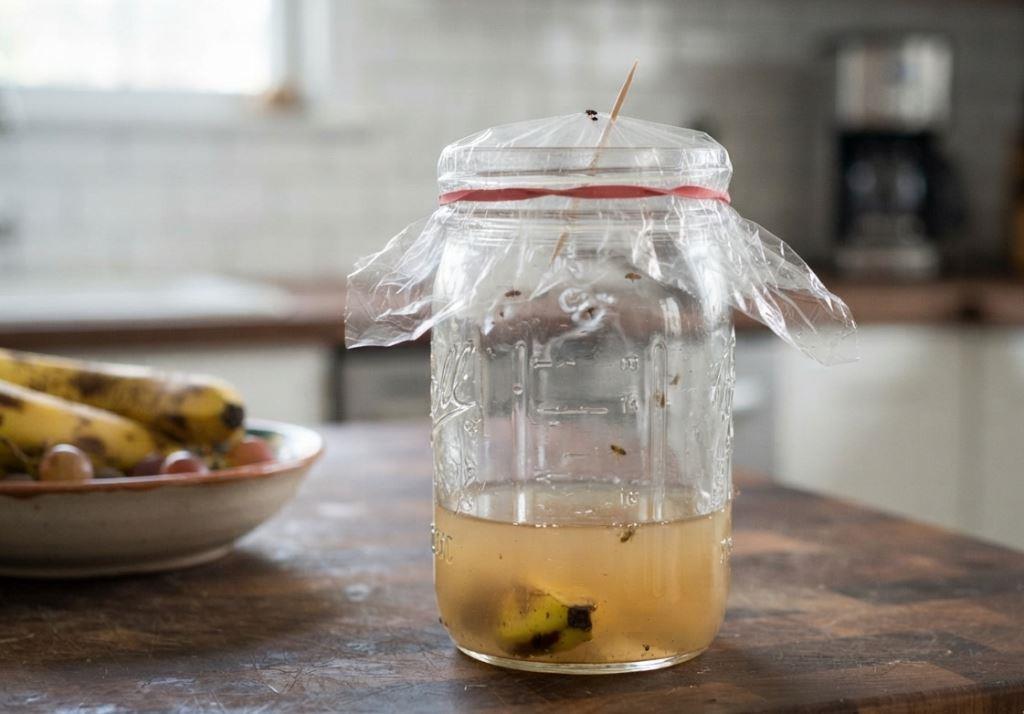
Stretch a piece of plastic wrap over the opening of the cup.
Secure it with a rubber band so the covering stays in place.
The cover helps create a more enclosed trap while allowing fruit flies to enter through small openings.
Step 4: Make a Few Small Holes
Use a toothpick to make several small holes in the plastic wrap.
Make the holes large enough for tiny fruit flies to enter, but not so large that the covering becomes ineffective.
Be careful not to puncture your hand while making the holes. Keep sharp tools away from children.
Step 5: Place the Trap Near the Fruit Flies
Set your homemade trap near the area where you notice the most activity.
Good places to try include:
- Beside your fruit bowl
- Near the kitchen trash can
- Close to a compost container
- On the counter near the sink
- Near the area where you store ripe bananas
Keep the trap away from food preparation surfaces, and make sure children and pets cannot knock it over or drink the mixture.
Within several hours or by the following day, you may start noticing fruit flies in the trap. Results vary depending on how many flies are present and whether other food sources are available.
An Even Easier Fruit Fly Trap Without Plastic Wrap
If you don’t want to bother with plastic wrap and rubber bands, you can try an open-cup version.
This method is particularly convenient when you want to set up a trap quickly.
What you’ll need:
- A small glass or jar
- Apple cider vinegar
- A few drops of dish soap
Instructions:
- Pour about 2–3 tablespoons of apple cider vinegar into the glass.
- Add 2–3 drops of dish soap and stir gently.
- Place the glass near the area where fruit flies gather.
- Check it regularly and replace the mixture when it becomes dirty or loses its usefulness.
This recipe is easy to prepare, but flies may escape more easily because the opening is uncovered. If you find that it isn’t catching many flies, try the plastic-wrap method instead.
You can also experiment with a narrow-necked jar, provided the opening is suitable for trapping the insects.
How to Make Your Apple Cider Vinegar Trap More Effective
Making the trap is the easy part. Getting it to catch flies consistently often comes down to where you place it and what else is attracting insects in your kitchen.
Here are some practical ways to improve your results.
1. Place It Where Fruit Flies Are Already Gathering
Don’t automatically put the trap in the middle of the kitchen and expect it to solve everything.
Watch where the flies tend to gather. Are they hovering around bananas? Do you see them near the sink? Are they appearing around the trash can?
Place the trap close to that area, while keeping it away from food preparation surfaces.
If the flies are spread across several parts of the kitchen, try using two or three small traps instead of relying on just one.
2. Remove Overripe Fruit
A bowl full of very ripe fruit can compete with your trap for the flies’ attention.
Check your fruit bowl and remove anything that is spoiled, leaking, or fermenting. Refrigerate ripe fruit when appropriate, and store produce in covered containers.
You don’t need to throw away perfectly good fruit. The goal is to remove the food sources that attract large numbers of flies.
3. Clean the Sink and Countertops
Fruit flies don’t always come from the fruit bowl.
Sticky juice spills, food crumbs, discarded fruit pieces, and residue around the sink can attract them too.
Wipe down countertops, clean food preparation areas, and rinse containers before placing them in the recycling bin.
If you have a garbage disposal, clean it according to the manufacturer’s instructions.
4. Empty the Trash Regularly
Fruit scraps inside a trash can can provide an attractive place for fruit flies to feed and potentially breed.
Empty the bin when it contains rotting food, clean away residue, and use a lid that closes properly.
If you compost food scraps, keep the container covered and empty it regularly.
5. Refresh the Trap When Necessary
A trap that has collected many insects or contains dirty liquid should be emptied and cleaned.
Prepare a fresh mixture with clean apple cider vinegar and a few drops of dish soap.
If your trap isn’t catching anything after a day or two, move it closer to the problem area, replace the bait, and investigate whether the insects are actually fruit flies.
What If the Fruit Fly Trap Isn’t Working?
It can be frustrating to set up a homemade trap and still see tiny flies flying around the kitchen.
Before adding more vinegar or soap, consider these common problems.
The Trap Is in the Wrong Place
If the trap is far away from the main source of the flies, it may not attract many insects.
Move it closer to the fruit bowl, trash can, or sink where you see the most activity.
There Are Too Many Other Food Sources
An uncovered bowl of ripe fruit or a bin full of scraps may be more attractive than the trap.
Remove these competing sources so the vinegar becomes a more noticeable option.
You May Be Dealing With Another Type of Small Fly
Not every tiny fly in the house is a fruit fly.
If you notice small flies hovering around houseplants, fungus gnats may be the problem. If they gather around drains, you may be dealing with drain flies.
An apple cider vinegar trap may catch some of these insects, but it won’t necessarily solve the underlying problem.
For fungus gnats, inspect the soil in your plants and avoid keeping it constantly wet. For drain flies, inspect and clean the affected drain appropriately.
Identifying the insect’s source is often more useful than making additional traps.
The Trap Needs Fresh Bait
Over time, the liquid can become dirty or collect debris.
Empty the old mixture, wash the container, and prepare a fresh batch. Make sure the plastic wrap is secure and the entry holes are not excessively large.
How Long Does an Apple Cider Vinegar Fruit Fly Trap Take to Work?
You may notice flies entering the trap within a few hours, although some traps take longer to attract noticeable numbers.
Check the container after the first day. If it is catching flies, leave it in place while continuing to clean the kitchen and remove breeding sources.
For a larger infestation, it may take several days or longer to see a substantial reduction.
The important thing is to deal with the source as well as the adult flies. A trap can catch the insects that are flying around, but it cannot stop new adults from emerging if suitable breeding material remains.
Keep monitoring the area even after the number of flies starts to decrease.
How to Keep Fruit Flies From Coming Back
Once you’ve reduced the number of flies, a few simple habits can help prevent another outbreak.
Store ripe fruit properly. Refrigerate ripe fruit when suitable, or use covered containers to reduce access.
Rinse fruit and vegetables. Wash produce before eating or preparing it, and remove damaged or rotting pieces.
Keep food scraps contained. Use covered trash and compost containers, and empty them regularly.
Clean spills promptly. Fruit juice, sugary drinks, and food residue can attract insects.
Check forgotten food. Look behind appliances, under counters, and inside cupboards for overlooked fruit or scraps.
Maintain clean drains. Remove organic buildup using an appropriate drain-cleaning method, following product directions when applicable.
Repair window screens. Intact screens can help reduce the entry of flying insects from outside.
These habits are just as important as the trap itself. The fewer places fruit flies have to feed and breed, the easier it becomes to control them.
Frequently Asked Questions
Does apple cider vinegar really attract fruit flies?
Yes. Its fermented smell can attract fruit flies, which are drawn to fermenting fruits and similar food sources. Adding dish soap helps trap flies that land in the liquid.
Can I use apple cider vinegar without dish soap?
Yes, you can try it, but the trap may be less effective at keeping flies in the liquid. Dish soap reduces surface tension, making it harder for flies to escape after landing.
Should I cover my fruit fly trap?
Covering the container with plastic wrap and making several small entry holes can help limit escape. You can also try a jar with a suitable narrow opening or a paper cone.
How much apple cider vinegar should I use?
For a small homemade trap, start with 2–3 tablespoons. You need enough liquid to cover the bottom of the container, not fill the entire glass.
Can I leave the trap out overnight?
Yes. Place it somewhere stable and away from children, pets, and food preparation surfaces. Check it regularly and replace the liquid when it becomes dirty or stops working well.
Why do I still have fruit flies after using the trap?
The flies may be breeding in a source you haven’t found yet. Check overripe fruit, trash, compost containers, spills, and other areas with decaying organic matter.
Also consider whether the insects are fungus gnats or drain flies rather than fruit flies.
Is apple cider vinegar better than regular vinegar?
Apple cider vinegar is a popular choice because its fermented, fruity aroma can attract fruit flies. Other baits may also work, so the best option can depend on the insects and the conditions in your home.
Final Thoughts
A DIY fruit fly trap with apple cider vinegar is an inexpensive, simple way to start tackling those annoying little flies around your kitchen.
With just a small amount of vinegar, a few drops of dish soap, and a glass or jar, you can make a trap in minutes.
For the best results, place the trap near the area where flies gather, replace the bait when needed, and remove the food scraps and residue that attract them in the first place.
The secret isn’t just trapping the flies you can see. It’s making your kitchen less inviting to the next generation, too.