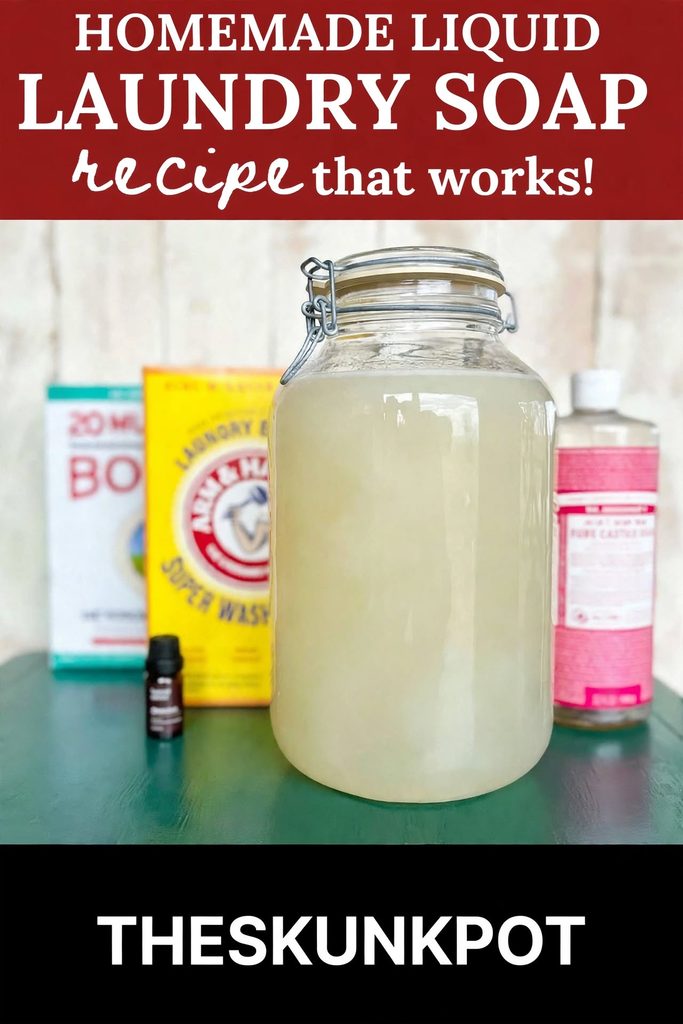
Doing laundry is one of those household chores that never seems to end. Between washing everyday clothes, towels, bedsheets, and children’s outfits, laundry detergent can become a regular expense that quickly adds up.
But what if you could make your own liquid laundry detergent at home using a few affordable ingredients?
A homemade liquid laundry detergent recipe can be a practical way to reduce household expenses, control the ingredients you use, and prepare a useful cleaning product whenever you need it.
The good news is that making laundry detergent does not have to be complicated. With ingredients such as washing soda, liquid soap, and water, you can prepare a simple homemade detergent suitable for many everyday laundry needs.
However, not every homemade laundry soap works equally well. Some recipes leave residue, struggle with greasy stains, or perform poorly in hard water. That’s why it is important to understand what each ingredient does and how to use your finished detergent properly.
In this guide, you’ll learn how to make homemade liquid laundry detergent, the ingredients you need, step-by-step instructions, variations for different laundry needs, storage tips, and common mistakes to avoid.
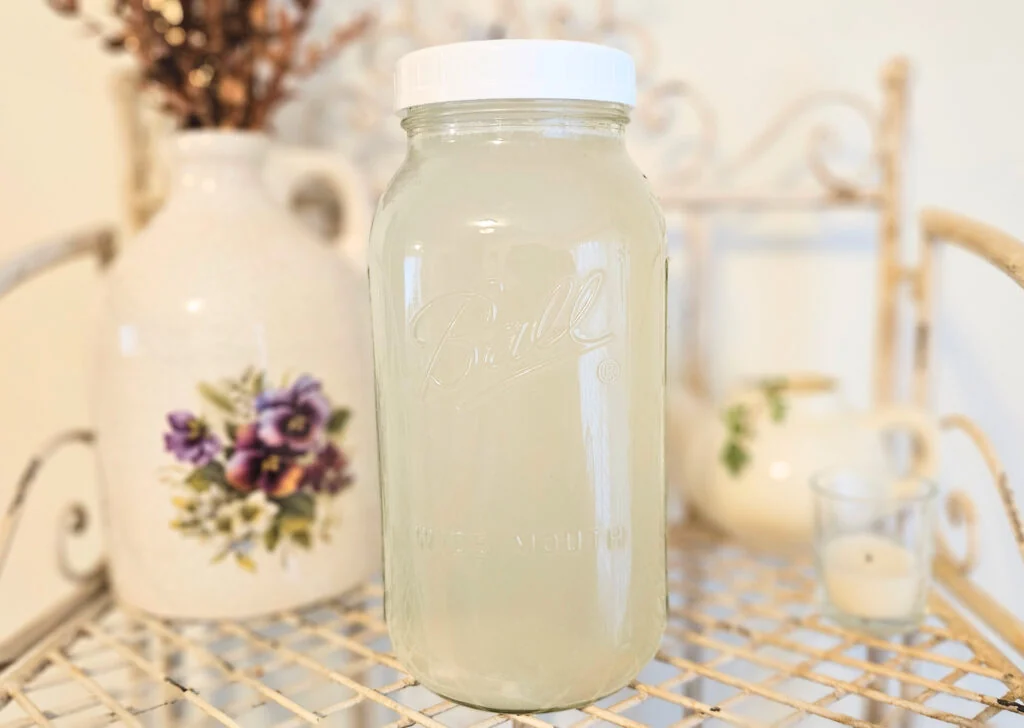
Why Make Homemade Liquid Laundry Detergent?
There are several reasons people choose to make their own laundry detergent instead of purchasing commercial products.
Here are some potential benefits:
- Control over ingredients: You can choose a simple formula without added fragrances or unnecessary coloring.
- Convenience: You can prepare a batch at home instead of making frequent shopping trips.
- Customizable fragrance: You can choose an unscented recipe or use a suitable laundry fragrance.
- Less packaging: Making larger batches may reduce the number of detergent bottles you purchase.
- Household budgeting: Depending on ingredient prices and how much detergent you use, homemade detergent may cost less.
One important consideration is that homemade detergent is not automatically cheaper or better than commercial detergent. The cost depends on ingredient prices, the amount used per load, and how well the formula cleans your particular laundry.
Commercial laundry detergents are also generally formulated with specialized cleaning ingredients, water softeners, enzymes, and other components that homemade recipes may lack.
Homemade Liquid Laundry Detergent Recipe
Preparation time: 15–20 minutes · Cooling time: 2–4 hours · Yield: Approximately 1 gallon
This is a simple homemade laundry soap recipe using washing soda and liquid soap.
Ingredients You Will Need
For this recipe, gather the following:
| Ingredient | Amount | Purpose |
|---|---|---|
| Liquid castile soap | ½ cup | Provides soap for cleaning |
| Washing soda | ½ cup | Helps remove dirt and reduce water hardness |
| Warm water | 1 gallon | Dilutes the ingredients |
| Fragrance-free liquid soap | Optional alternative | Can replace castile soap if suitable for laundry use |
Important: Washing soda is sodium carbonate, not baking soda. They are different products and should not be treated as interchangeable.
Choose a plain liquid soap without added moisturizers, oils, or conditioning ingredients where possible.
Equipment Needed
- Large mixing container or bucket
- Measuring cups
- Long-handled spoon
- Funnel
- Clean storage bottles or containers
- Labels for identifying the finished product
Step-by-Step Instructions
Step 1: Heat the water
Warm approximately 4 cups of water in a suitable pot.
The water should be warm, not boiling. Excessive heat is unnecessary and may create handling risks.
Step 2: Dissolve the washing soda
Add ½ cup of washing soda to the warm water.
Stir slowly until the powder dissolves completely.
This ingredient helps improve cleaning by reducing the effect of certain minerals found in hard water.
Step 3: Add the liquid soap
Allow the washing soda mixture to cool slightly.
Slowly add ½ cup of liquid castile soap and stir gently.
Avoid vigorous mixing because it can produce excessive foam.
Step 4: Add the remaining water
Pour the mixture into a large, clean bucket.
Add enough water to bring the total volume to approximately one gallon.
Stir gently until everything is combined.
Step 5: Allow the mixture to cool
Leave the detergent to cool completely.
Some homemade mixtures may become thicker as they cool, while others remain relatively thin.
This is normal, although excessive separation or unusual changes in smell may indicate that the mixture should be discarded.
Step 6: Transfer into storage containers
Use a funnel to transfer the finished detergent into clean, clearly labeled containers.
Leave a little room at the top so you can shake the mixture if the ingredients separate.
Your homemade liquid laundry soap is ready to use.
How to Use Homemade Liquid Laundry Detergent
The correct amount depends on the concentration of your mixture, your washing machine, the size of your laundry load, and how dirty the clothes are.
For this relatively dilute recipe, start with:
| Laundry load | Suggested starting amount |
|---|---|
| Small load | ¼ cup |
| Medium load | ⅓ cup |
| Large load | ½ cup |
These are starting estimates, not standardized detergent dosages. Adjust based on cleaning results and whether residue appears.
For high-efficiency washing machines, be especially careful. Traditional soap-based mixtures may create residue and are not necessarily suitable for HE machines. Check your machine manufacturer’s recommendations before using homemade detergent.
A useful tip: If clothes come out with a soapy feel or visible residue, reduce the amount and consider switching to a properly formulated commercial detergent.
5 Homemade Liquid Laundry Detergent Variations
Once you understand the basic recipe, you may want to experiment with other household laundry formulas.
Here are five variations to consider.
1. Homemade Liquid Laundry Detergent Without Borax
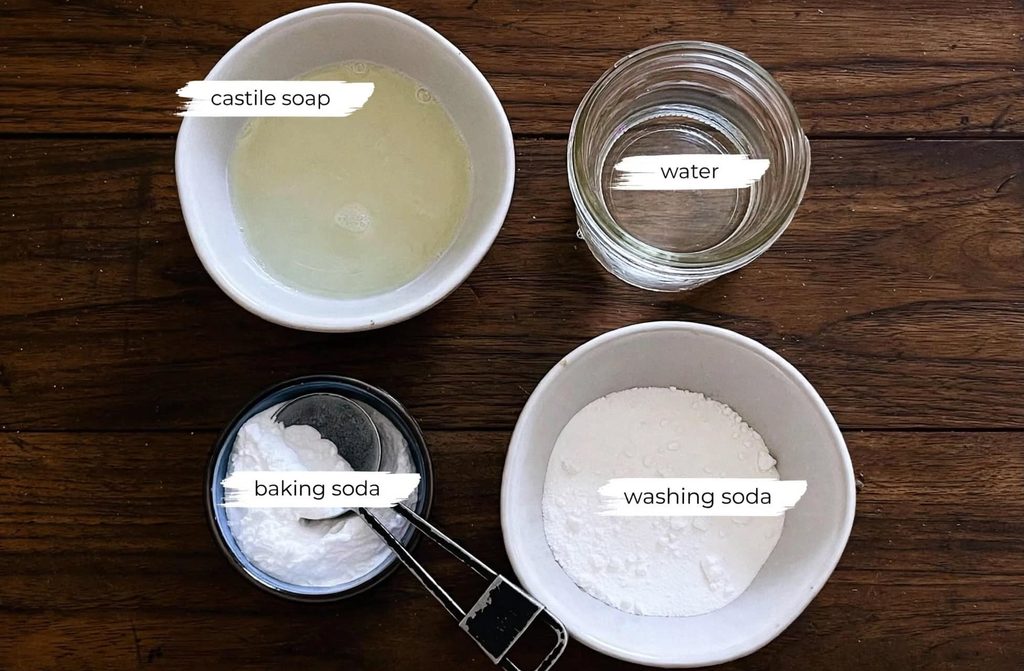
Some people prefer making homemade laundry detergent without borax.
This recipe uses washing soda and liquid castile soap instead.
Ingredients:
- ½ cup washing soda
- ½ cup liquid castile soap
- 1 gallon warm water
Instructions:
- Dissolve the washing soda in approximately 4 cups of warm water.
- Allow the mixture to cool slightly.
- Add the liquid castile soap.
- Add the remaining water.
- Stir gently.
- Transfer to a clean storage container.
This is a simple alternative for people who prefer not to include borax in their homemade laundry mixture.
Keep in mind that washing soda is still an alkaline cleaning ingredient and can irritate the skin and eyes. Handle it carefully.
2. Homemade Liquid Laundry Detergent With Borax
Borax is another ingredient commonly found in traditional homemade laundry soap recipes.
It is also known as sodium borate and is used in some household cleaning formulations.
Ingredients:
- ½ cup washing soda
- ½ cup borax
- ½ cup liquid soap
- 1 gallon warm water
Instructions:
- Warm approximately 4 cups of water.
- Add the washing soda and borax.
- Stir until dissolved.
- Allow the mixture to cool slightly.
- Add the liquid soap.
- Add the remaining water.
- Stir gently and transfer into a labeled container.
Safety note: Borax can irritate the eyes and skin and is harmful if swallowed. Keep it away from children and pets, avoid inhaling its powder, and follow the product’s safety instructions. Do not use it on clothing that requires special care without checking fabric and product compatibility.
3. Homemade Liquid Laundry Soap With Baking Soda
Baking soda is sometimes included in homemade laundry mixtures because it can help with odors and cleaning.
However, it is not a direct substitute for washing soda.
Ingredients:
- ½ cup liquid castile soap
- ½ cup baking soda
- 1 gallon warm water
Instructions:
- Dissolve the baking soda in a small quantity of warm water.
- Add the liquid castile soap.
- Pour in the remaining water.
- Stir gently.
- Store in a clean, labeled container.
This is a basic experimental laundry mixture, not a proven replacement for a formulated detergent. Baking soda does not provide the same water-softening action as washing soda.
4. Homemade Liquid Laundry Detergent for Sensitive Skin
If you have sensitive skin, fragrance-free laundry products may be worth considering.
The simplest approach is to avoid unnecessary fragrance and choose ingredients carefully.
Ingredients:
- ½ cup plain, unscented liquid soap
- ¼ cup washing soda
- 1 gallon water
Instructions:
- Dissolve the washing soda in warm water.
- Let it cool slightly.
- Add the unscented liquid soap.
- Add the remaining water.
- Stir gently.
- Transfer to a clean container.
Even fragrance-free homemade detergent can irritate sensitive skin. Soap-based products can also leave residue, which may cause problems for some people.
For people with eczema or significant skin sensitivities, a dermatologist-recommended, fragrance-free commercial detergent may be a better option.
5. Homemade Laundry Detergent for Everyday Odors
Laundry can sometimes retain unpleasant smells even after washing, particularly when clothes remain damp for too long.
For everyday laundry, start with a suitable detergent and focus on good washing and drying practices.
Ingredients for this simple soap mixture:
- ½ cup liquid castile soap
- ½ cup washing soda
- 1 gallon water
Instructions:
Follow the basic recipe above.
For better odor control:
- Do not overload the washing machine.
- Avoid leaving wet clothes inside the machine.
- Use the appropriate wash temperature for the fabric.
- Dry clothes thoroughly.
- Clean your washing machine regularly.
For stubborn sweat, mildew, or body odors, an enzyme-based or oxygen-based laundry product designed for the fabric may work better than homemade soap.
Tips for Making Homemade Laundry Detergent Work Better
Making your own detergent is only part of the process. How you wash, rinse, and dry your clothes also matters.
Here are some useful tips.
1. Do Not Use Too Much Detergent
It may seem like adding more detergent will make clothes cleaner, but excessive soap can leave a residue on fabrics.
Start with a small amount and adjust based on the results.
2. Treat Stains Before Washing
For stubborn stains, pre-treat the affected area using a suitable laundry stain remover.
Different stains require different treatments.
For example:
- Grease stains may need a suitable degreasing laundry product.
- Mud should generally be allowed to dry before excess material is brushed away.
- Sweat stains may respond to an appropriate enzyme-based stain remover.
- Food stains should be treated according to the fabric and stain type.
Always test stain treatments on a hidden area first.
3. Use the Correct Water Temperature
Hot water is not always necessary.
Cold water can work well for many everyday loads, while warm or hot water may be appropriate for certain fabrics and heavily soiled items.
Always check garment care labels.
4. Keep Your Washing Machine Clean
Soap residue can accumulate inside washing machines over time.
Clean your machine according to the manufacturer’s maintenance instructions.
If you notice a persistent unpleasant smell, inspect the detergent drawer, door seal, filter, and drum where applicable.
5. Shake the Detergent Before Use
Some homemade mixtures separate or become thicker during storage.
If your mixture separates, gentle shaking may help redistribute the ingredients.
However, do not use a batch that has developed mold, an unusual smell, or other signs of contamination.
How Long Does Homemade Liquid Laundry Detergent Last?
Homemade liquid laundry detergent does not contain the same preservatives and stability controls found in many commercial products.
Because this recipe contains water, it can become contaminated during storage, especially if handled with unclean equipment or stored in unsuitable containers.
For this reason:
- Prepare small batches rather than making excessive quantities.
- Use clean mixing equipment and containers.
- Store the detergent in a cool, dry place.
- Keep the container tightly closed.
- Label it with the preparation date.
- Discard it if you notice mold, unusual odors, or unexpected changes.
There is no universally validated shelf life for this homemade formula, so avoid assuming it will remain safe and effective for several months.
Common Mistakes to Avoid When Making Homemade Laundry Detergent
Even a simple recipe can go wrong when ingredients are measured incorrectly or unsuitable products are used.
Here are some mistakes worth avoiding.
1. Confusing washing soda with baking soda
These ingredients are chemically different. Washing soda is more alkaline and provides stronger water-softening action.
2. Using too much liquid soap
Excessive soap can cause buildup, residue, and poor rinsing.
3. Adding too much fragrance
Strong fragrances can irritate sensitive skin and may not be suitable for all fabrics.
4. Mixing cleaning chemicals
Never combine laundry ingredients with bleach, ammonia, vinegar, or other cleaning products unless the manufacturer specifically confirms compatibility. Mixing household chemicals can produce dangerous reactions.
5. Using homemade soap in every washing machine
Some washing machines, especially high-efficiency models, require specially formulated low-sudsing detergents.
6. Storing detergent in unmarked bottles
Always label homemade cleaning products clearly and keep them away from children and pets.
7. Expecting homemade detergent to remove every stain
Homemade soap mixtures do not contain all the enzymes, surfactants, and other cleaning ingredients found in modern commercial detergents.
Homemade Liquid Laundry Detergent vs. Store-Bought Detergent
Which option is better?
It depends on your laundry needs, budget, washing machine, and preferred cleaning results.
| Feature | Homemade detergent | Commercial detergent |
|---|---|---|
| Ingredient control | More control over basic ingredients | Depends on product |
| Preparation | Requires mixing | Ready to use |
| Cleaning performance | Variable | Generally more consistent |
| Stain removal | May be limited | Specialized formulations available |
| Fragrance | Customizable | Many fragrance options |
| Shelf stability | Limited and variable | Generally longer |
| HE machine compatibility | Not guaranteed | HE-labeled options available |
| Cost | Depends on ingredients | Depends on brand and concentration |
For lightly soiled laundry, a homemade mixture may be adequate for some households.
However, commercial laundry detergents are generally the more dependable option for heavily soiled clothing, stubborn stains, and high-efficiency washing machines.
Frequently Asked Questions
1. What is the easiest homemade liquid laundry detergent recipe?
One simple recipe combines ½ cup liquid castile soap, ½ cup washing soda, and enough warm water to make approximately one gallon. Dissolve the washing soda first, add the soap, and mix gently.
2. Can I make liquid laundry detergent without borax?
Yes. You can make a basic mixture using washing soda, liquid soap, and water. Borax is not essential to the simplest homemade laundry soap recipe.
3. Is homemade liquid laundry detergent cheaper?
It can be, depending on ingredient prices and how much you use per load. However, homemade soap may require larger quantities and may not clean as effectively as concentrated commercial detergents.
Compare the total cost per wash rather than simply comparing the price of one batch with one detergent bottle.
4. Can I use homemade laundry detergent in an HE washing machine?
Be cautious. Homemade soap mixtures are not necessarily formulated for high-efficiency machines. They may produce residue and interfere with proper cleaning. Check your machine manufacturer’s instructions before using them.
5. Why does my homemade laundry detergent become thick?
Some soap-based mixtures thicken as they cool because of the ingredients and their concentrations. Gentle shaking may help, but excessive thickening can make measuring and dispensing difficult.
6. Can I add essential oils to homemade laundry detergent?
You can add fragrance to some homemade cleaning products, but essential oils are not necessary for cleaning and may cause skin irritation or allergic reactions. They can also affect certain fabrics. Fragrance-free products are preferable for sensitive skin.
7. Can homemade liquid laundry detergent remove tough stains?
It may help with everyday dirt, but it is not necessarily effective against stubborn grease, blood, grass, and protein-based stains. A suitable commercial stain remover or enzyme-based laundry product may provide better results.
8. How much homemade laundry detergent should I use per load?
For the diluted recipe in this guide, start with approximately ¼ cup for a small load and adjust cautiously. The right amount depends on the washing machine, load size, water hardness, and cleaning results.
9. Can I use homemade laundry detergent for washing towels?
You can experiment with it for lightly soiled towels, but soap residue can make towels feel stiff and reduce absorbency. A properly formulated laundry detergent may be a better choice, especially in hard water.
10. Can I use homemade laundry detergent for baby clothes?
Be careful when choosing homemade laundry products for babies. Soap residue and fragrances may irritate sensitive skin. A fragrance-free detergent formulated for sensitive skin is often a more predictable option.
11. How should I store homemade liquid laundry detergent?
Store it in a clean, tightly closed, clearly labeled container in a cool, dry location. Keep it away from children and pets, and discard it if you notice mold, unusual odors, or unexpected changes.
Final Thoughts
Making homemade liquid laundry detergent can be an interesting way to experiment with household cleaning and reuse a few simple ingredients.
With washing soda, liquid castile soap, and water, you can prepare a basic laundry soap mixture without complicated equipment or an expensive shopping list.
However, remember that homemade laundry soap is not the same as a professionally formulated laundry detergent. Its cleaning performance, stability, and washing-machine compatibility can vary.
Start with a small batch, use modest amounts, and pay attention to how your clothes and washing machine respond.
If you have heavily soiled laundry, persistent stains, hard water, or a high-efficiency washing machine, a properly formulated commercial detergent may be the better choice.
Have you ever made your own laundry detergent at home? Share your favorite recipe, ingredients, or laundry-saving tips in the comments!